DNA損傷修復タンパク質の解析DNA repair proteins
BRCAをはじめとするDNA損傷修復因子の機能解析や遺伝子変異・多型解析を行います。
Functional studies of DNA repair factors, including BRCA proteins, together with analyses of genetic variants and polymorphisms.

COMPARATIVE ONCOLOGY UNIT
がんになりやすい・なりにくい動物から
「発がんと発がん防御の仕組み」を理解する
Understanding cancer development and defense
through animals with contrasting cancer susceptibility
DNAは紫外線や化学物質、細胞内で生じる活性酸素などによって日々損傷を受けています。しかし、生体にはDNA損傷を修復する仕組み(DNA損傷修復機構)が備わっており、遺伝子の安定性を維持することで、がんの発症を防いでいます。一方、この修復機構の異常は遺伝子変異の蓄積を引き起こし、がんの発症につながることが知られています。
DNA is continually damaged by ultraviolet radiation, chemical agents and reactive oxygen species generated within cells. Living organisms possess DNA repair systems that maintain genomic stability and help prevent cancer. When these systems fail, however, genetic mutations can accumulate and contribute to cancer development.
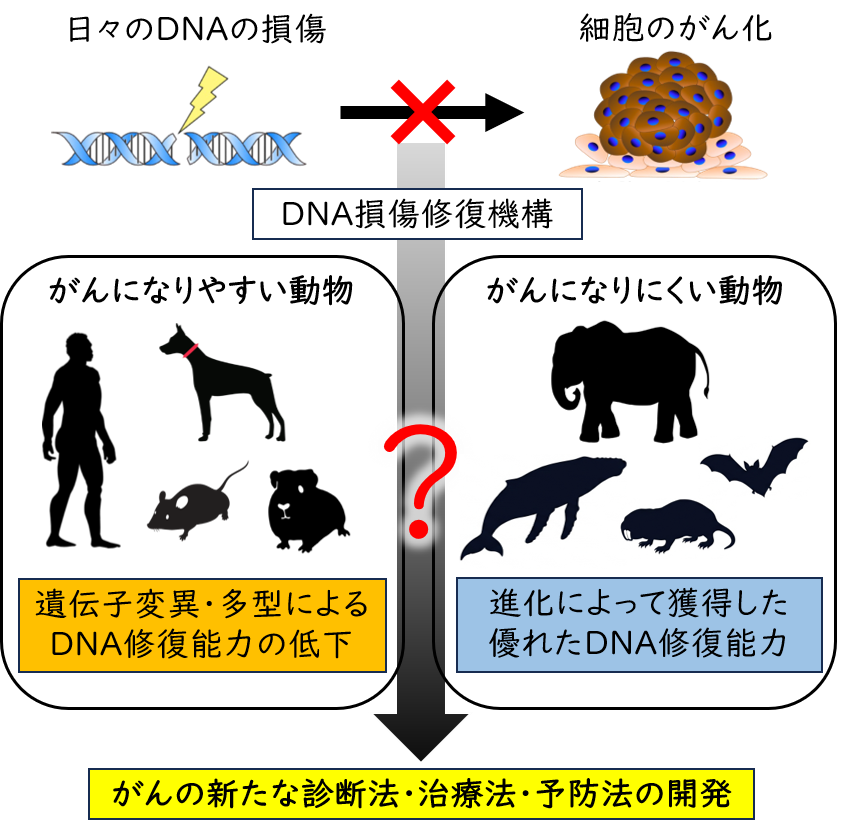
当研究ユニットでは、比較腫瘍学の視点から、「なぜある動物はがんになりやすく、ある動物はがんになりにくいのか」という問いに取り組んでいます。DNA損傷修復タンパク質をはじめとする発がん防御因子に着目し、動物種間の違いや、個体ごとの遺伝子変異を比較することで、発がんと発がん防御の分子メカニズムを解明することを目指しています。
From the perspective of comparative oncology, we ask why some animals are more susceptible to cancer while others are comparatively resistant. By focusing on DNA repair proteins and other factors involved in cancer defense, and by comparing species differences and individual genetic variants, we seek to clarify the molecular mechanisms of cancer development and protection.
そのために、がんになりやすい動物(イヌ、マウス、モルモット、ヒトなど)と、がんになりにくい動物(ゾウ、クジラ、ハダカデバネズミ、コウモリなど)を対象として、多角的な比較解析を行っています。
Our comparative analyses include species with relatively high cancer susceptibility—such as dogs, mice, guinea pigs and humans—and species known for comparatively low cancer incidence, including elephants, whales, naked mole-rats and bats.
分子、ゲノム、細胞の解析を組み合わせ、動物種を超えて共通する仕組みと、それぞれの種がもつ特徴の両面を調べます。
We combine molecular, genomic and cellular analyses to examine both shared mechanisms and species-specific features.
BRCAをはじめとするDNA損傷修復因子の機能解析や遺伝子変異・多型解析を行います。
Functional studies of DNA repair factors, including BRCA proteins, together with analyses of genetic variants and polymorphisms.
多様な動物由来サンプルを用いた比較ゲノム解析などにより、発がん防御に関わる候補因子を探索します。
Comparative genomic analysis of samples from diverse animal species to identify candidate factors involved in cancer defense.
ゾウやクジラなどの動物由来細胞(線維芽細胞・リンパ球)を用いて、DNA損傷応答やDNA修復機能、候補因子の機能を解析します。
Studies of DNA damage responses, repair capacity and candidate-factor function using animal-derived cells, including fibroblasts and lymphocytes from elephants and whales.
これらの解析を通して、DNA損傷修復機構の異常による発がんメカニズムと、進化の過程で獲得された発がん防御機構を明らかにし、新たながんの診断法・治療法・予防法の開発につながる知見の創出を目指しています。
Through these studies, we aim to clarify how defects in DNA repair contribute to cancer and how cancer-defense mechanisms have emerged through evolution, generating knowledge that may support new approaches to cancer diagnosis, treatment and prevention.